Showing posts with label guest post. Show all posts

Thursday, January 25, 2024

The Second Ending by Riana Everly ~ Guest Post, Excerpt, & Giveaway!

Hello, friends! Riana Everly is here with her third book in her new series Austen Echos! How lovely, these books came out so quickly! One a month! Nice!


Thanks so much, Candy, for letting me stop here today to talk about my new book, The Second Ending. This is the third and final book in my Austen Echoes series of contemporary Austen retellings, all centred around members of a concert choir in my home city of Toronto. This book, just released a couple of days ago, is inspired by my favourite of Austen’s novels, Persuasion, and trust me, you’ll love it!

One of the fun challenges about re-setting a Regency-era novel into the present is how to make the characters keep up with the times. For the most part, women today just don’t sit at home and sip tea while waiting for their heroes to come dashing across the fields on a jet-black horse. A modern heroine needs a modern life, and that is probably going to involve a career of some sort.

Likewise, the men need new lives as well. Even if I were to keep Austen’s military characters in that field, times have changed. Naval captains now draw a salary, rather than keeping a chunk of loot from whatever foreign ships they capture. It’s a different world, and our characters need to reflect that.

When I began thinking about this contemporary take on
Persuasion, I knew right away that Ashleigh Lynch (my modern Anne Elliot) would be a lawyer. It’s a career acceptable to her snooty family, but it also lets her be a helper. Just like Anne Elliot is the one helping her sister Mary with the children, taking care of packing up Kellynch hall after her father and sister Elizabeth take off to Bath, managing the crisis when Louisa has her dreadful accident in Lyme, modern Ashleigh is the one helping as well. She takes legal aid cases, working with people who can’t afford to pay a lawyer from their own pockets, helping abused women escape their tormenters, assisting families get new starts in life. 

It’s not the sort of career to make someone rich, since legal aid rates are far below what a lawyer can charge private clients, but it’s the sort of career that suits someone like Ashleigh, who wants to make a difference for people who need her.

What about Marcus, my modern Frederick Wentworth? He had to come from a place that’s absolutely unacceptable to
Ashleigh’s family. He had to start off with a job that the Lynches would hold their noses at, but that would also give him the possibility of doing extremely well for himself. Here, I decided to put him in the trades.

Marcus Fredericks met Ash when he was a construction worker, and she was a university student. But in the years since they broke up, he took his uncles small business and turned it into a huge success, building a development corporation that made the construction worker into the CEO. 

When Ash and Marcus cross paths again, eight years after her family managed to break them up, they’re very different people from who they were back then. Or are they?

Do these new interpretations work? Do these careers suit a modern take on Austen’s wonderful characters? You’ll have to read the book and decide that for yourself!

To give you a taste, here’s an excerpt from The Second Ending: A Modern Austen Persuasion Improvisation.


*** 


Still, law had been a good choice for her. She’d excelled at her classes and passed her exams with ease, and discovered that, all stereotypes aside, there was a great deal of good she could do in her profession. It wasn’t all money laundering and overcharging clients, but instead, it was a way to help people out of bad situations. Whether that meant supporting a small business
owner in a lease dispute or advocating for a new immigrant with little English when his employer decided not to pay him, she found she went to bed each night with the sense of having made a difference in someone’s life.

Law had also engendered in her a passion for helping others, something that had not been part of her rather pampered childhood. Her father was, as she joked, a poor trust-fund baby. The family once had quite a lot of money. Some forward-thinking grandfather had put it all into reasonable investments, and the interest was enough to live on more than comfortably.

One of those investments had been a house in Rosedale, where Ashleigh’s father had lived since he was a baby. Living there, in that most prestigious part of town, an enclave of old money and new sports cars, Walter Lynch could consider himself part of Toronto’s elite. He was certainly well-connected, having been to the right schools and having made the right contacts, and if his wealth didn’t quite extend to summer homes in the south of France, it was enough to keep up appearances without having to resort to actually having to work.

Because Walter Lynch, for all his insistence that his daughter train for a suitable career, had never worked a day in his life. Ashleigh suspected her parents would be quite horrified at what she really did with the precious law degree they had insisted so vehemently that she achieve.

Ashleigh sighed as she glanced around her slightly tatty flat once more. Oh, her father would have a fit if he saw it. Her sister would drag her to the nearest real estate agent in seconds, and her mother would smile in her absentminded way and say, “It’s not very fancy, is it, dear? Wouldn’t you prefer something nicer?” As if wishing would make it so.

She had, once, had something nicer, back eight years ago, when her life was full of promise and when the future looked wonderful. When she was still with Marcus.

Seeing him again today had disturbed all the ghosts, bringing long-buried memories flooding back. Her mind replaced the faded paint and worn furniture with the sweet place they had shared for not nearly long enough. She recalled the butter-yellow walls, the deep burgundy curtains, the lovely long couch that one of his friends had found for them, the comfortable chair, the elegant dining room table… 

Did he still have them? Or had he burned everything after she’d walked out? 

She let out another deep sigh. Probably, by the anger he had vented then, and by the hard expression he’d borne today when he had seen her for the first time since their awful break-up, he’d burned them, then burned the ashes, and then buried them. Like her heart.

Because that was the second time her family had destroyed her dreams.


The Second Ending
A Modern Persuasion Improvisation
by Riana Everly

Blurb:

The last person Eglinton Echoes member Ashleigh Lynch expected to see across the table from her was her ex, Marcus Fredericks. Eight years ago when they were in love, she was a law student and he was a construction worker, not nearly good enough for her elitist family. But times have changed. Now she’s a lawyer, and he owns the development company threatening the playing fields she’s been engaged to protect. 

Her family managed to crush her dreams and her confidence back then, and seeing Marcus again has rocked her to the core. But as talks over the playing fields continue, they are forced to confront each other again and again, and even the hardest hearts aren’t always impervious to old, tender feelings. 

But rekindling their romance won’t be easy. They are on different sides of a dispute, and Ashleigh has caught the eye of a charming guy from the city’s planning department. When the development project is threatened and Ashleigh discovers who her real enemy is, her very world begins to crumble around her, and not even her precious music is safe. Can she find the inner strength to deal, at last, with an old threat and reclaim the happiness that was ripped away from her eight years ago? 

This musical reimagining of Jane Austen’s beloved Persuasion will have you cheering the characters on, pulling you into their world and into their hearts.
 
Buy: Amazon (paid link)
Add to Goodreads


FTC Disclaimer: Links to Amazon. I am an Amazon Associate. I will receive a small commission (at no cost to you) if you purchase a book through the link provided. Thanks!


About the Author

Born in South Africa, award-winning author Riana Everly has called Canada home since she was eight years old. She proudly boasts one husband, two grown(ish) children, three degrees, four recordings, five instruments (of varying proficiencies), six languages (also of varying proficiencies), and thirteen novels (and growing). She also can’t count very well.

When not indulging her passion for Jane Austen, Riana loves cooking, travel, and photography. She’s a historian and trained classical musician, specialising in viola, and is delighted to be able to combine her love of writing and music in her novels. 

She now lives in Toronto, Canada, with her husband, a secret stash of chocolate, and far too many books.


Connect with Riana Everly


* * * GIVEAWAY* * *

Riana is hosting a giveaway! Here's a message from her:

I’m delighted to be able to offer a giveaway of an eBook at each stop on this blog tour. I will randomly select one person who comments on the post here through random.net. Please make sure I have a way to contact you if you win! I will take comments until midnight, North American Eastern time, five days after the blog post goes live. Good luck everyone!


Congratulations, Riana, on the release of The Second Ending! That's awesome! Also, many thanks for visiting with us and offering one of my readers a chance to win an eCopy of The Second Ending.


Monday, November 6, 2023

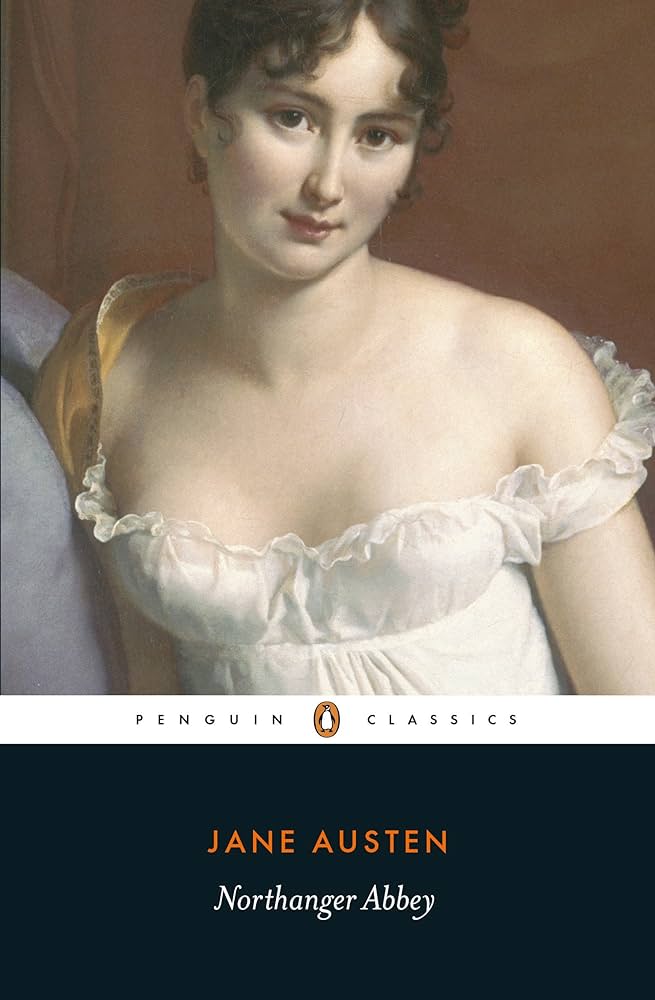
Elaine Jeremiah ~ Why I read Jane Austen ~ Guest Post

 Hello, my friends! It's my pleasure to have Elaine Jeremiah here today! Her topic is one I think we can all agree upon. Please give her a warm welcome! 


Why I Read Jane Austen


Why do we read Jane Austen’s novels? Why does anyone read Jane Austen’s novels? You might think these are daft questions to ask, but I think it bears thinking about if only because her novels are still immensely popular 200 years after her death.

I’ll tell you why I read her novels. I read them because they never get old – there’s always something new to discover in them, as I found when rereading Mansfield Park very recently. You can always find a new aspect to your favourite characters – and your least – even if you’ve read the novels many times before.

I think that one reason why we still read Jane Austen’s novels is because they all work on many levels. What do I mean? Well, take Northanger Abbey for example. I know it’s not most people’s favourite of her novels, but on one level it’s obviously a romance about a girl obsessed with Gothic fiction, who must learn to live in the real world and not fantasise about people and places being things that they are not.

But on another, cleverer level, Austen is using her story to playfully critique the Gothic romance novels that were popular at the time – like The Mysteries of Udolpho by Ann Radcliffe (which I’ve read and actually really enjoyed!). Northanger Abbey is a pastiche of novels like that, with its heroine going to a castle-like house, whose mistress is long dead and whose master is aggressive and potentially a villain!

Of course, this relates to the first level as the heroine, Catherine Morland, is obsessed with reading Gothic fiction and fantasises that the people and places around her are just like the novels she’s reading.

On yet another level, Austen also takes the opportunity in Northanger Abbey to defend the medium of the novel against its detractors, saying that she will not join in with other novel writers in denouncing the novel, who do so even as they are adding their own to its numbers. ‘I cannot approve of it’ she says. Don’t you just love her?!

Northanger Abbey is just one example of Austen’s superlative talent in telling a story with many different facets to it. All of her novels demonstrate this ability she has to engage us and make us think more deeply in an entertaining way, as with her discussion of the worth of the novel as mentioned above.

So why do you read Jane Austen’s novels? What is it about them that makes you keep returning to them?


About Elaine Jeremiah


Elaine lives in Bristol, South West England with her husband. But she was privileged enough to grow up in Jane Austen country, in Hampshire. 

She’s always loved writing, but it’s only been in recent years that she’s been able to devote more time to it. She decided to self-publish with the help of her wonderful husband who’s very tech-savvy! In 2013 she self-published her first novel, but it was only with her fourth, her novel Love Without Time, that she felt she finally found her niche: Jane Austen Fan Fiction! 

She’s always loved Jane Austen’s writing and the Regency era, so this felt like a natural thing for her to do. Elizabeth and Darcy: Beginning Again is the first Pride and Prejudice variation she’s written. 


Connect with Elaine

XInstagramWebsite


Books by Elaine Jeremiah

Paid links below


Elizabeth & Darcy Beginning Again: A Pride and Prejudice Variation 


By Time Divided

Love without Time

Reunion of the Heart

Teaching Mr Leavis

The Inheritance


FTC Disclaimer: Links to Amazon. I am an Amazon Associate. I will receive a small commission if you purchase a book through the link provided. Thanks!


Many thanks to Elaine for stopping to visit with us today! I must say Northanger Abbey is in my top three of Austen's books!


I'm going to end with the questions Elaine posed. Please leave a comment and let us know your thoughts! 

So why do you read Jane Austen’s novels? What is it about them that makes you keep returning to them?

Wednesday, October 11, 2023

"Mr. Knightley ...in His Own Words" by Shannon Winslow ~ Blog Tour

 Hello, my friends! I'm delighted to have Shannon Winslow visiting here today! Her new book, Mr. Knightly ...in His Own Words, was released this month. I believe this is the 3rd book in her In His Own Words series. 


Without further ado, here's Shannon! Please give her a warm welcome.


I’m in love with Mr. Knightley, and here’s why.

First, there’s Jeremy Northam. I mean, what’s not to like? I know the Knightleys from the other film adaptations are pretty hunky too, but JN was my first, and so he will always be special to me.

Secondly, Mr. Knightley is a really good guy. He’s sensible, good natured, and straightforwardly honest. Everybody likes and respects him. But he doesn’t show off his importance. Instead, he uses what he has to help others – sending gifts of food or the use of his carriage – all very quietly, not wanting or expecting his generosity to be noticed. And don’t you think it’s pretty heroic how kind to and tolerant of the neurotic Mr. Woodhouse he is?

But mostly it’s because I’ve been spending so much time with him over the last year. It’s true; I always fall a little in love with the hero of the book I’ve been writing, which in this case is Mr. Knightley (Mr. Knightley in His Own Words). He hasn’t had it easy, I can tell you. I’ve taken him through some rough times, but he’s bravely overcome, his kindness and sense of humor intact. The way I see it, he deserves his happy ending, and I’m going to make sure he gets it!

Finally, of course, there’s the name. When spelled correctly, it conjures up images of a knight in shining armor, right? But if you were married to the guy and thought “Nightly” instead. Hmm. Well, I’ll leave that to your own imaginations…


Mr. Knightley ... in His Own Words
by Shannon Winslow

Publication Date: Oct. 5th, 2023
Pages: 331 pages, Kindle Edition


Book Blurb

Mr. George Knightley. According to Emma Woodhouse, you won’t see one in a hundred who is so clearly the gentleman. Respected by all, he’s kind, unpretentious, and scrupulously honest, with an air so remarkably good that it’s unfair to compare other men to him. We also know he’s been his “own master” from a young age. But Jane Austen tells us little more. 

What were his early years like, and how did he lose his parents? A man in his mid-thirties, he must have had at least one romance along the way. Did it end badly? Is that why he’s never married? When and how did his relationship with Emma shift from friendship to love? And what can explain his incredible forbearance towards the eccentric Mr. Woodhouse? Now, Mr. Knightley reveals these answers and more in His Own Words

This is not a variation from but a supplement to the original story of Emma, chronicled in the hero’s point of view. Two-thirds completely new material, it features key events in Mr. Knightley’s past – events that still haunt him and yet have shaped who he’s become, the superior man Emma can’t help falling in love with.
 
Buy: Amazon *(paid link)
Add to Goodreads

*FTC Disclaimer: Link to Amazon. I am an Amazon Associate. I will receive a small commission if you purchase a book through the link provided. Thanks!

Meet the Author

Shannon Winslow approaches writing JAFF a little differently, adding onto rather than varying from canon, giving us prequel, sequel, and supplemental views of favorite characters. Shannon, who has authored eleven Austenesque novels so far, lives with her husband in the log home they built in the countryside south of Seattle, where she writes and paints in her studio facing Mr. Rainier. Visit her at her website/blog and follow her on Facebook.


Thank you so much for stopping by, Shannon! Congratulations on the release of your new book. I happen to favor Jeremy Northam as Knightley also. He's so good! 

What about you, readers? Do you have a favorite Knightley? Let us know in the comments!

Tuesday, November 1, 2022

Fashionable Goodness: Christianity in Jane Austen's England by Brenda S. Cox ~ Blog Tour ~ Guest Post

 Hello, my friends! I have Brenda S. Cox here with her new book Fashionable Goodness: Christianity in Jane Austen's England. Such an interesting topic! Please give Brenda a warm welcome!


Fashionable Goodness
Christianity in Jane Austen's England
By Brenda S. Cox

The Church of England was at the heart of Jane Austen's world of elegance and upheaval. Fashionable Goodness: Christianity in Jane Austen's England explores the church's role in her life and novels, the challenges that church faced, and how it changed the world. In one volume, this book brings together resources from many sources to show the church at a pivotal time in history, when English Christians were freeing enslaved people, empowering the poor and oppressed, and challenging society's moral values and immoral behavior. 

Readers will meet Anglicans, Dissenters, Evangelicals, women leaders, poets, social reformers, hymn writers, country parsons, authors, and more. Lovers of Jane Austen or of church history and the long eighteenth century will enjoy discovering all this and much more: 

     • Why could Mr. Collins, a rector, afford to marry a poor woman, while Mr. Elton, a vicar, and Charles Hayter, a curate, could not? 
     • Why did Mansfield Park's early readers (unlike most today) love Fanny Price? 
     • What part did people of color, like Miss Lambe of Sanditon, play in English society? 
     • Why did Elizabeth Bennet compliment her kind sister Jane on her "candour"? 
     • What shirked religious duties caused Anne Elliot to question the integrity of her cousin William Elliot? 
     • Which Austen characters exhibited "true honor," "false honor," or "no honor"? 
     • How did William Wilberforce, Hannah More, and William Cowper (beloved poet of Marianne Dashwood and Jane Austen) bring "goodness" into fashion? 
     • How did the French Revolution challenge England's complacency and draw the upper classes back to church? 
     • How did Christians campaigning to abolish the slave trade pioneer modern methods of working for social causes? 

Explore the church of Jane Austen's world in Fashionable Goodness: Christianity in Jane Austen's England.
 

Fashionable Goodness: Christianity in Jane Austen’s England, by Brenda S. Cox, tells the story of the church in Austen’s novels and in Austen’s world. Here’s a taste of one of the many topics in this wide-ranging resource.
 
Women as Religious Leaders in Austen’s England
Guest Post by Brenda S. Cox

All of Jane Austen’s clergy are men: Mr. Collins, Mr. Elton, Edmund Bertram, Edward Ferrars, Henry Tilney, and others. In Austen’s Church of England, only men could be ordained as clergy. But when I visited Bath a few years ago, I got to hear women preaching at both Bath Abbey and Christ Church. Women have only been ordained as Church of England priests since 1994 (though some other countries in the Anglican Communion began ordaining women earlier). 
In Jane Austen’s England, however, some women were already ministering in public ways. 

The Countess of Huntingdon

I discovered the Countess of Huntingdon quite by accident as I was walking through Bath. Her lovely chapel is on the way to St. Swithin’s Church, where Austen’s parents were married. The Countess of Huntingdon’s Chapel, founded in 1765 (ten years before Austen’s birth), is now the Museum of Bath Architecture. But you can still see how the chapel was set up.


Caption: The Countess of Huntingdon built houses for herself in places like Bath, with large attached “private” chapels, open to the public. © Brenda S. Cox 2022


The Countess became a Methodist in the 1700s, when Methodist revivals were sweeping England. At that time, Methodists were trying to bring new life into the Church of England. They separated from it by the end of the 1700s. Most of their followers were from the lower and middle classes, but the Countess of Huntingdon, of course, was from the nobility. She did not preach, but was a powerful church leader, always looking for new ways to spread the gospel message.

The Countess hosted “spiritual routs,” parties where Methodist ministers preached, in her London home to bring the gospel message to her peers. She held separate meetings for poorer people. However, that was not enough for her.

Methodist ministers, although ordained in the Church of England, were having difficulty finding places to preach. Their “enthusiastic,” or emotional, style of preaching, and their message of salvation by faith alone, were not popular among other clergy. So the Countess came up with an ingenious solution. As a noblewoman, she could have a private chapel attached to her home (as the Rushworths have in Mansfield Park). She could also hire private chaplains, and get them ordained if necessary. So she built homes for herself all over England, with large chapels attached to them. (She was not as wealthy as you might think; she had to sell her jewels to build the first chapel, and she raised money for the others.) She chose chaplains from among the Methodist preachers, including the famous preacher George Whitefield. Then she invited those chaplains and other Methodists ministers to preach in her chapels around the country.

Caption: Methodist preachers, including George Whitefield, took turns preaching at this pulpit in the Countess of Huntingdon’s Chapel in Bath. © Brenda S. Cox 2022


The Countess also started her own seminary to train clergymen, after Oxford University refused to ordain several “methodistical” students. 

However, when she built a chapel in London at Spa Fields, the local clergyman sued her and won. At that point she had to separate from the Church of England. But her services were still essentially Anglican services. The Countess of Huntingdon “Connexion” is still operating, listing 22 chapels in England and more than 30 chapels in Sierra Leone.

The Countess was sometimes as imperious as Lady Catherine de Bourgh, and her work was often controversial. But she was a church leader, with a heart for God, who influenced many people.

Hannah More

Hannah More was another woman of Austen’s time who influenced many toward deeper religious faith and moral behavior. She was from a very different strata of society, the daughter of a middle-class schoolmaster. However, with her wit and intelligence, she made friends with influential people, especially Samuel Johnson (author of the first major English dictionary), David Garrick (famous actor), and William Wilberforce (leader of the abolition movement). She became part of the “Clapham Sect,” a group of Christians who led the fight against slavery and the slave trade. 

More wrote many books, which were far more popular than Austen’s at the time. They don’t appeal to us much today, though. One of Austen’s reviewers called More’s only novel, Coelebs in Search of a Wife, a “dramatic sermon”; he praised Austen for her less obtrusive religious approach. (This novel is mentioned in Austen’s letters of Jan. 24 and Jan. 30, 1809; Cassandra recommended it to Jane.) Many of More’s other books confronted the immoral behavior of the upper classes. However, the upper and middle classes still loved her books. In a letter, Austen mentions some of her friends reading More’s latest production (May 31, 1811).

Hannah More and her sister also started and supported Sunday schools throughout the impoverished region of Cheddar, where they lived. These schools gave a basic education to poor people, both children and adults, teaching them reading and other skills that enabled them to improve their lives. More also wrote popular tracts which were sold cheaply to the working classes to give them what was considered good reading material.

More’s influence as a Christian leader (though she was not in the clergy) helped to improve the moral values and behavior of the whole country of England.

Hannah More published dozens of books, but only one novel: Coelebs in Search of a Wife: Comprising Observations on Domestic Habits and Manners, Religion and Morals. Because of its title, Austen asked, “Is it written only to Classical Scholars?” But it was wildly popular, in the UK and the US. First published in 1808, it was already in its 11th edition in 1809.

Other Denominations

The Methodist leader, John Wesley, allowed women to preach if they felt they had an “extraordinary call” from God. He told one of them, “Sister, do all the good you can.” Later on, when women preachers were visiting a congregation, Methodists often listed them by their husbands’ names, with an asterisk to show that the wife would be preaching!

The Quakers were the most egalitarian religious group of the time. They did not ordain ministers, but officially “recorded” those with a recognized gift of spoken ministry. Some of these were women. Elizabeth Fry, who led the fight for prison reform in England, was a Quaker minister.

You can read much more of these women’s stories, and much more, in Fashionable Goodness: Christianity in Jane Austen’s England, now available from Amazon and Jane Austen Books.


Purchase Links

Add to Goodreads

FTC Disclaimer: Link to Amazon (paid link). I am an Amazon Associate. I will receive a small commission if you purchase a book through the link provided. Thanks!

Recommendations:

“Finally! Fashionable Goodness is the Jane Austen reference book that’s been missing from the bookshelves of every Austen fan and scholar.”
~ Rachel Dodge, bestselling author of Praying with Jane

“You will look at Mr. Collins, the Crawfords, the Dashwoods, the Tilneys, the Wickhams, and Willoughbys--and especially Fanny Price!--with new and surprising insights. Bravo to Brenda Cox for giving us this very accessible, illuminating take on the ‘fashionable goodness’ of Austen’s era!”
~ Deborah Barnum, Jane Austen in Vermont

“Brenda Cox’s Fashionable Goodness: Christianity in Jane Austen’s England is an indispensable guide to all things religious in Jane Austen’s world.”
~ Roger E. Moore, Vanderbilt University, author of Jane Austen and the Reformation

“This scholarly, detailed work is a triumph. Easily read, helpful and accurate, it provides a fascinating panorama of 18th century Anglicanism and the various challenges the Church and wider society faced. Cox’s many insights will enrich readers’ understanding and appreciation of Jane Austen’s novels and her life as a devout Christian.”
~ The Revd. Canon Michael Kenning, vice-chairman of the Jane Austen Society (U. K.) and former rector of Steventon


About the Author


Brenda S. Cox has loved Jane Austen since she came across a copy of Emma as a young adult; she went out and bought a whole set of the novels as soon as she finished it! She has spent years researching the church in Austen’s England, visiting English churches and reading hundreds of books and articles, including many written by Austen’s contemporaries. She speaks at Jane Austen Society of North America meetings (incuding three AGMs) and writes for Persuasions On-Line (JASNA journal) and the websites Jane Austen’s World and Faith, Science, Joy, and Jane Austen.


Blog Tour

Oct. 20 Jane Austen’s World, Vic Sanborn, Interview
Oct. 21  My Jane Austen Book Club, Maria Grazia, Giveaway and Guest Post, “Sydney Smith, Anglican Clergyman and Proponent of Catholic Rights, Potential Model for Henry Tilney”
Oct. 22 Clutching My Pearls, Lona Manning, Book Review
Oct. 23 Jane Austen Daily on Facebook, Austen and Her Nephews Worship (1808)
Oct. 25 Jane Austen in Vermont, Deborah Barnum, Giveaway, Excerpt from Chapter 1, and Book Review
Oct. 27 Australasian Christian Writers, Donna Fletcher Crow, Guest Post, “Seven Things Historical Fiction Writers Should Know about the Church of England”
Oct. 30 Regency History, Andrew Knowles, Book Review and Video Interview
Nov. 1  So Little Time, So Much to Read!, Candy Morton, Guest Post, “Women as Religious Leaders in Austen’s England” ~ You're here!
Nov. 2 Austen Variations, Shannon Winslow, Interview, Excerpt from Chapter 7, “The Clergyman’s Wife”
Nov. 3 Laura’s Reviews, Laura Gerold, Book Review
Nov. 4 Jane Austen’s World and Kindred Spirit, Saved by Grace, Rachel Dodge, Book Review and Giveaway
Nov. 7 The Authorized Version, Donna Fletcher Crow, Book Review
Nov. 8 Julie Klassen, Book Review and Guest Post, “Jane Austen at Church”
Jan. 10 The Calico Critic, Laura Hartness, Book Review


Thank you Brenda! That was fascinating. Your book looks like a excellent reference book. Congratulations on its release!

So, friends, what are your thoughts? Please feel free to leave any comments or questions below.   

Tuesday, March 1, 2022

The Grail: The Saving of Elizabeth Darcy by Don Jacobson ~ Blog Tour ~ Guest Post, Excerpt, & Giveaway!

Hello, my friends! I'm delighted to have Don Jacobson on the blog today with his thoughts on the power of love in The Bennet Wardrobe series and an excerpt from his final book in the series, The Grail: The Saving of Elizabeth Darcy

Don't forget the giveaway! Details are at the bottom of the page!


The Power of Love

     If the Wardrobe has taught me anything, it is that love is the driving—and unifying—force behind everything good that happens in this or any other universe.

     Yet, love’s coruscating glory was unseen that evening in October 2015 when I laid down the opening lines of Miss Bennet’s First Christmas. That novella became the second book (Origins being the first) in the opening volume of the series—The Keeper: Mary Bennet’s Extraordinary Journey. However, this is not a book report. Rather, you may consider it a forensic consideration of the power of love as it was revealed across the eight volumes of the Bennet Wardrobe series.

     The loves are articulated in the front of the final volume: The Grail: The Saving of Elizabeth Darcy.

C.S. Lewis, in his 1958 lectures on the BBC,
elucidated the four types of love found in the Bible:
Storge: empathy bond
Philia: friendship bond
Eros: erotic/romantic bond
Agape: unconditional love

***

The Bennet Wardrobe operates
in the service of these and other loves.

The Fifth Love being
exagoras agapis: redemptive love.
This is the love where we strive to become
better versions of ourselves.

Niebuhr identified the Sixth Love:
synchotikí agape, or forgiveness.
Such love makes all human life possible.

***

In the end, though, the first six Loves
are bound together by the greatest of
all…the Seventh Love:
thysiakí agape, or sacrificial love.

There is no greater love than this, for a man
to lay down his life for his friends. John 13:15


     From today’s vantage point, I can look back through seven years of examination of the varied destinies planned for and endured by the main characters laid down by Jane Austen. Instantly apparent is the presence of the search for love and Home—that place, according to Thomas Bennet, where your love can grow. From the first lines of Keeper, we see Mary Bennet reaching out for the foundation upon which all other loves must necessarily be built: self-love (the Zeroeth Love?). But, at this early stage of writing (I had not conceived a unified series but rather three stand-alone books on Mary, Kitty, and Lydia), I was unaware of the importance of love within the context of what I was writing.
 
     None of the love powers the universe thinking began coalescing until late in the third volume—The Exile: Kitty Bennet and the Belle Époque—when Kitty’s therapy with Freud began to open new vistas for the chronicler of her story. Even then, that place where the Bennet sisters went to commune with their Guides not really described. Rather, their state of concentration and focus was all that was seen by readers. What we observed was Henry Fitzwilliam, a Darcy-like character of the 1880s, break through his pride and prejudices to execute a Fifth Love (although not identified as such) turnaround.
 
     Volume Five saw multiple excursions into the realm of the guides, that otherworld where those who watch over all of us exist. You may call them angels or handmaidens. They are the ultimate expression of the Universe’s love. Kitty’s freezes us all with her embrace of the Seventh Love—again unidentified and unarticulated.

     Volume Six—The Avenger: Thomas Bennet and a Father’s Lament—marks the beginning of the complete unfolding of the Fifth and Sixth Loves. Mrs. Bennet, now a most sensible lady after the double weddings in 1811, educates her husband about their mutual need to become the best versions of themselves to play their part in the great design. From here on (and, if you are playing the word count game, about the last 60 percent of the series), the conversation of esoteric love serves as the dominant theme of each book.

     My own journey through the Wardrobe leaves me wiser. Where I had started my trek appreciating the way Austen and Austenesque writers incorporated Lewis’s Four Loves, I now saw three others…and perhaps a fourth. How rich life can be when those who inhabit it are powered not only by descriptive loves (Lewis’s Four) but also by those of the deepest action. I pray that you, too, will discover all the loves in your life. 


The Grail: The Saving of Elizabeth Darcy
by Don Jacobson


Blurb 

“You must throw away notions of what you want.
Only then will you be free to accept what you need.”
 —The Brown Guide to Fitzwilliam Darcy, 1840 

Long has the amazing Bennet Wardrobe involved itself in the affairs of Longbourn. Where before its actions have been cloaked in mystery, its purpose now becomes clear. The fey cabinet has molded the universes to strike a balance that can be achieved only by saving the greatest love story ever told. 

Follow the paths taken by Pemberley’s master and mistress after their children are grown. See Elizabeth Darcy struggle to rekindle the love glow that has dimmed after a quarter century. Grasp the unaccountable pain her departure levels upon the entire Derbyshire family. Watch Fitzwilliam Darcy learn that which he must in order to become the best version of himself: worthy of his Elizabeth. 

The Grail: The Saving of Elizabeth Darcy closes out the Bennet Wardrobe series. The disparate threads spun by the remarkable women born to a Hertfordshire couple of insignificant fortune are woven together. These lives have become the tapestry that records the destiny of Jane Austen’s lovers, immortal in any here/now or where/when.
 
Buy: Amazon US (paid link) • Amazon UK
Add to Goodreads.

FTC Disclaimer: Link to Amazon US. I am an Amazon Associate. Should you purchase a copy of the book through the link provided, I will receive a small commission. Thanks!

Advanced Praise

Here is what Lory Lilian, one of the leading authors of Austenesque fiction, has to say about the Wardrobe story arc.

As an author myself, I admit I would never be capable to craft such a complex, enchanting, and exciting story, not to mention an entire series! Congratulations to Don for a masterful work! I highly recommend The Bennet Wardrobe series to all readers, not only those who love Pride and Prejudice, but anyone who enjoys time travel, mystery, originality, and history.


About the Author


Don Jacobson has written professionally for forty years, from
news and features to advertising, television, and radio. His work has been nominated for Emmys and other awards. He has previously published five books, all nonfiction. In 2016, he published the first volume of The Bennet Wardrobe Series, The Keeper: Mary Bennet’s Extraordinary Journey. Since then, Meryton Press has re-edited and republished Keeper and the subsequent six volumes in the series. The Grail: The Saving of Elizabeth Darcy is the eighth and concluding volume. Other Meryton Press books by Jacobson include Lessers and Betters, In Plain Sight, and The Longbourn Quarantine. All his works are also available as audiobooks (Audible).

Jacobson holds an advanced degree in history with a specialty in American foreign relations. As a college instructor, he taught United States history, world history, the history of western civilization, and research writing. He is currently in his third career as an author and is a member of JASNA and the Regency Fiction Writers.

Besides thoroughly immersing himself in the Austenesque world, Jacobson also enjoys cooking, dining out, fine wine, and well-aged scotch whiskey.

His other passion is cycling. Most days will find him “putting in the miles.” He has ridden several “centuries” (hundred-mile days). He is especially proud of having completed the AIDS Ride–Midwest (five hundred miles from Minneapolis to Chicago) and the Make-a-Wish Miracle Ride (three hundred miles from Traverse City to Brooklyn, both in Michigan).
When not traveling, Jacobson lives in Las Vegas, Nevada, with his wife and co-author, Pam—a woman Miss Austen would have been hard-pressed to categorize.


Connect with Don Jacobson


Blog Tour Schedule

March 1 So Little Time... (you are here!)


* * * GIVEAWAY * * *


It’s giveaway time! For this blog tour,  Meryton Press is giving away 6 eBooks of The Grail: The Saving of Elizabeth Darcy


a Rafflecopter giveaway


A huge congratulations to Don Jacobson for the release of The Grail: The Saving of Elizabeth Darcy and the completion of The Bennet Wardrobe series!! Wow! Just wow!

Many thanks to Janet Taylor of More Agreeably Engaged for organizing and including me in the tour! 


So, friends, any thoughts? Are you looking forward to reading The Grail: The Saving of Elizabeth Darcy?
Related Posts Plugin for WordPress, Blogger...